
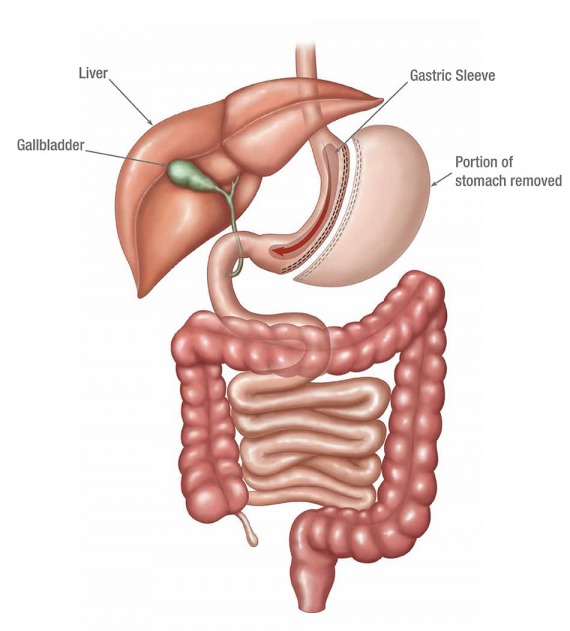
Sleeve gastrectomy surgery (also known as gastric sleeve) is a relatively new procedure but has gained popularity because of its low complication rate and good weight loss results. In fact, it is one of the most popular weight loss procedures.
You will be put under general anesthetics for the duration of this surgery, which typically only takes one to two hours. The sleeve gastrectomy surgery is performed as a laparoscopic procedure, which involves making five or six small incisions in the abdomen and performing the procedure using the laparoscope (video camera) and inserting long surgical instruments through the incisions. The sleeve gastrectomy involves removing about 75-80% of the stomach, leaving a narrow gastric tube or “sleeve”—resembling a banana. No intestines are removed or bypassed during this procedure, which is a major advantage of this procedure because it brings a much lower chance of developing nutrient deficiencies.
Sleeve gastrectomy surgery aids in weight loss for a number of reasons: with the new narrow stomach pouch, it limits the amount of food that can be eaten at one time, and after eating a small amount of food, you will feel full very quickly and continue to feel full for several hours. The gastric sleeve may also cause a decrease in appetite. In addition to reducing the size of the stomach, it may also reduce the amount of gut hormones produced, which impact a number of factors including hunger, satiety, and blood sugar control.
On average, you should be able to leave the hospital after a day or two post surgery, and your incision sites will be a little sore—pain medication will be given to use as needed. You will start out on a strictly clear liquid diet for the first two weeks, and then gradually progress to pureed foods, and then to soft foods. This progression usually takes 3-4 weeks but you will need to be discussing each step with your healthcare team. It will be very important to consistently talk with your healthcare team about nutrition, exercise, and any physical or psychological changes. Most patients will rapidly lose a significant amount of weight and will continue to—studies show patients typically lose about 60% of their excess weight during the first two years following surgery. And weight loss maintenance for long term has been found to be greater than 50%.
A few risks and disadvantages to having the sleeve gastrectomy surgery are: it is a non-reversible procedure, so there’s no going back! Complications are very rare (occur less than 1%) for this procedure, but they can happen…complications such as infection, bleeding, blood clots, injury to organs, and leaking. Overall, the operative risk is low (even lower than gastric bypass). There is also potential of long term nutrient deficiencies, due to the small amount of food intake, but that can be leveled with daily use of multi-vitamins.
All in all, this procedure produces substantial results in weight loss and has very few complications/risk associated. No organs are bypassed and no foreign object is inserted and left there. However, this procedure is not for everyone. And that’s ok. If this doesn’t seem right for you, read on in the next blogs to learn about a few more options for weight loss surgery.
Are you a candidate? Start here
Intro: Should I consider weight loss surgery?
Series article #2: Gastric Bypass Surgery – Everything you want to know (and more)
Series article #3: Sleeve Gastrectomy – Everything you want to know (and more)
Series article #4: The Duodenal Switch (DS) – Everything You Want to Know (and more)


